If you are using solar energy storage systems, understanding Depth of Discharge (DoD) is essential. It directly affects battery lifespan, performance, and your return on investment.
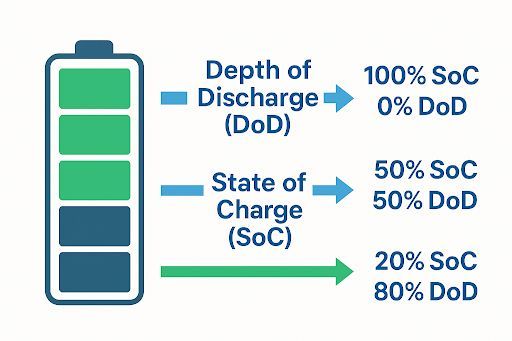
Table of Contents
What Is Depth of Discharge (DoD)?
Depth of Discharge (DoD) refers to how much energy has been used from a battery compared to its total capacity.
- If you use 50% of a battery → DoD = 50%
- If you use 80% → DoD = 80%
In simple terms:
DoD shows how “empty” your battery is.
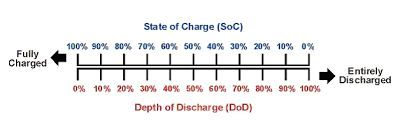
DoD vs State of Charge (SoC)
These two terms are often confused:
- DoD (Depth of Discharge) = energy used
- SoC (State of Charge) = energy remaining
Example:
- Battery at 30% SoC → DoD = 70%
Why Depth of Discharge Matters
Understanding depth of discharge helps you:
1. Extend Battery Life
Batteries degrade faster when deeply discharged.
- 100% DoD → shorter lifespan
- 50% DoD → longer lifespan
This is especially important for solar systems in Africa where battery replacement is costly.
2. Improve Cost Efficiency
A battery with higher usable DoD gives you more energy per cycle.
- Lead-acid battery → typically 50% DoD
- Lithium battery (LiFePO4) → up to 80–95% DoD
This means lithium batteries deliver more usable power daily.
3. Optimize Solar Storage Systems
In areas with unstable electricity (like many African cities), managing depth of discharge ensures:
- Longer backup time
- Better system reliability
- Reduced maintenance costs
Recommended DoD for Different Batteries
Lead-Acid Batteries
- Recommended DoD: 30%–50%
- Deep discharge can damage the battery quickly
Lithium Batteries (LiFePO4)
- Recommended DoD: 80%–90%
- Designed for deep cycling with minimal damage
👉 This is why lithium batteries are becoming the top choice for home solar systems.
Real Example: Why DoD Impacts Your Investment
Let’s compare:
- 10 kWh lead-acid battery (50% DoD) → usable energy = 5 kWh
- 10 kWh lithium battery (90% DoD) → usable energy = 9 kWh
👉 You get almost double usable energy from lithium.
How to Control Depth of Discharge
To manage depth of discharge effectively:
- Use a smart inverter with battery protection
- Avoid draining batteries to 0%
- Set discharge limits (e.g., stop at 20% SoC)
- Monitor usage via apps or battery management systems (BMS)
Common Mistakes to Avoid
- ❌ Fully draining batteries every day
- ❌ Using lead-acid batteries like lithium
- ❌ Ignoring manufacturer DoD recommendations
- ❌ Not monitoring battery usage
Final Thoughts
Depth of discharge (DoD) is a key factor in maximizing battery performance and lifespan.
If you want:
- Longer battery life
- Better solar efficiency
- Lower long-term costs
👉 Always choose the right DoD strategy and battery type.
For most modern solar systems, lithium batteries with high DoD offer the best value and reliability.
FAQ: Depth of Discharge
Q1: What is a safe depth of discharge?
A: It depends on the battery type. Lithium batteries can safely reach 80–90%, while lead-acid should stay around 50%.
Q2: Is 100% DoD bad?
A: Yes. Regular full discharge significantly shortens battery life.
Q3: Does higher DoD mean better battery?
A: Not always, but higher usable DoD (like in lithium batteries) usually means better efficiency.
If you’re building a solar system or selling batteries, understanding depth of discharge will help you design smarter, more profitable energy solutions.