Across many African countries, power outages are common and diesel generators are still widely used. However, fuel costs continue to rise, and generator maintenance is expensive. Because of this, more households and businesses are turning to lithium battery energy storage systems.
But many people still ask an important question: Is a lithium battery really worth the cost in Africa?
The answer is yes for most users—especially when you look at the long-term cost instead of just the purchase price.
Even if lithium costs two or three times more initially, the cost per kWh over its lifetime is much lower.
Table of Contents
Initial Price vs Long-Term Value
One of the biggest concerns about lithium batteries is the higher upfront price compared to traditional lead-acid batteries. However, the key factor is the total lifetime energy output.
Lead-Acid Battery
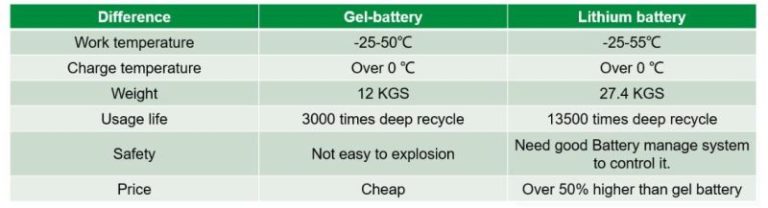
Lead-acid or gel batteries are cheaper to buy, but they have several limitations:
- Only 50% usable capacity
- Short lifespan of 3–5 years
- Sensitive to heat and deep discharge
- Require regular maintenance
In hot climates and with frequent outages, lead-acid batteries often fail earlier than expected.
Lithium (LiFePO₄) Battery
Lithium iron phosphate batteries are designed for modern solar energy systems.
تشمل المزايا ما يلي:
- 80–90% usable capacity
- 2,000–6,000 charge cycles
- Maintenance-free operation
- Better performance in solar charging systems
For example:
- A 200Ah lead-acid battery may deliver about 720 kWh during its lifetime.
- A 200Ah lithium battery can deliver around 4,700 kWh.
Generator Fuel vs Lithium Storage
In many African cities, the most common backup power solution is still a diesel or petrol generator.
However, generators have ongoing costs.
Generator Costs
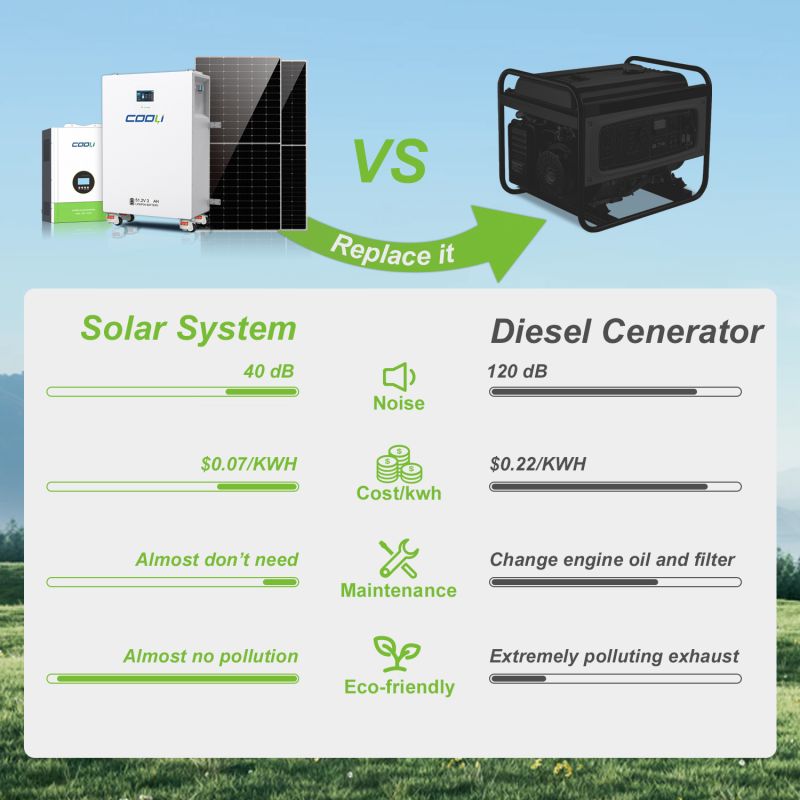
If a small 3kVA generator runs about 5 hours per day during power outages, it typically consumes 2–3 liters of fuel daily.
At around $1.2 per liter, that equals:
- نبذة عن $3.6 per day
- More than $1,300 per year
This money is continuously spent on fuel and maintenance.
Lithium Battery Advantage
A lithium battery system works differently.
Once installed with an inverter and solar panels, the system stores energy and provides instant backup power when the grid fails.
تشمل المزايا ما يلي:
- No fuel cost
- Silent operation
- Fast charging
- Instant power supply
Over several years, the savings from fuel alone can exceed the cost of the battery system.
Lifespan in African Climate
African environments can be challenging for energy systems due to high temperatures and unstable electricity grids.
Lithium batteries perform better in these conditions.
Cycle Life Comparison
Lead-acid batteries usually provide:
- 500–1,200 cycles
Lithium batteries typically provide:
- 2,000–6,000 cycles
For locations with frequent outages, this means:
- Lead-acid batteries may need replacement every 2–4 years
- Lithium batteries can last 8–12 years
BMS Protection
Most lithium batteries include a نظام إدارة البطارية (BMS).
This system protects the battery from:
- Overcharging
- Over-discharging
- Short circuits
- Voltage fluctuations
These protections are particularly important in regions with unstable electricity infrastructure.
Is Lithium Suitable for Congo and Uganda?
DR Congo
Electricity supply in many areas of the Democratic Republic of Congo is unreliable, especially outside major cities.
For this reason, lithium batteries are becoming increasingly popular for:
- المنازل
- Small businesses
- Telecom stations
- Mining operations
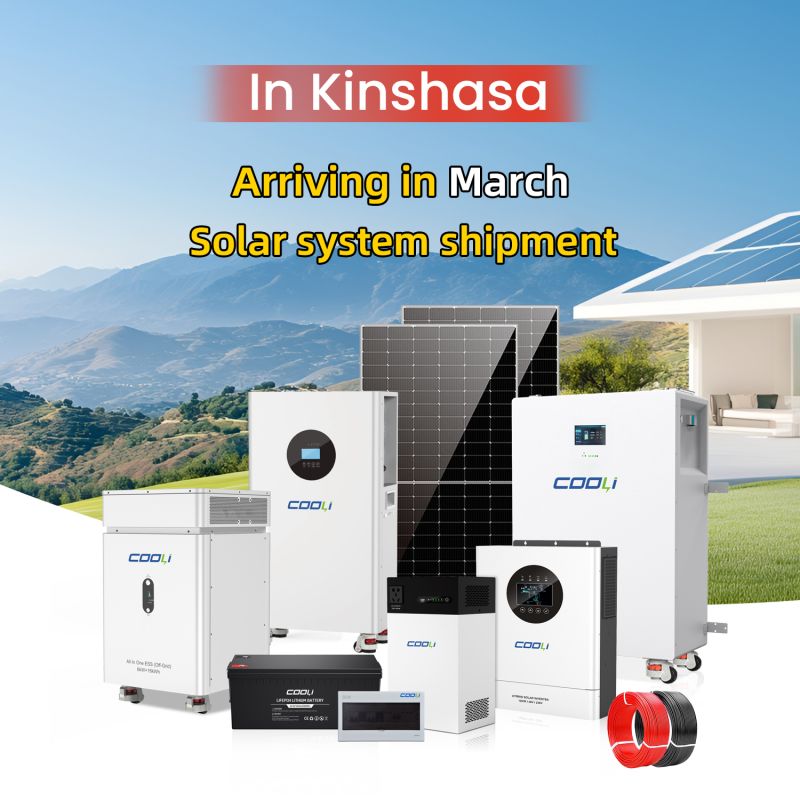
Local suppliers with warehouses and service support in Kinshasa are important because buyers can inspect products and receive technical assistance.
Uganda
Uganda has a growing renewable energy market and a strong demand for solar storage systems.
Many households and businesses use lithium batteries to solve problems such as:
- Load shedding
- Voltage fluctuations
- Rising generator fuel costs
The market is also seeing innovation, including battery-swapping systems and hybrid solar solutions.
Conclusion
So, is a lithium battery worth it in Africa?
For most users, the answer is yes.
Although the initial investment is higher than lead-acid batteries or generators, lithium batteries offer major advantages:
- Longer lifespan (8–12 years)
- Lower long-term energy cost
- No fuel consumption
- Reliable backup power
- Better compatibility with solar systems
In markets like Congo and Uganda, where electricity supply can be unstable and fuel prices are high, lithium batteries provide a practical path toward energy independence and long-term savings.
When choosing a system, it is important to select products with certifications such as UN38.3 and IEC, a reliable BMS, and preferably a supplier with local stock and after-sales support.