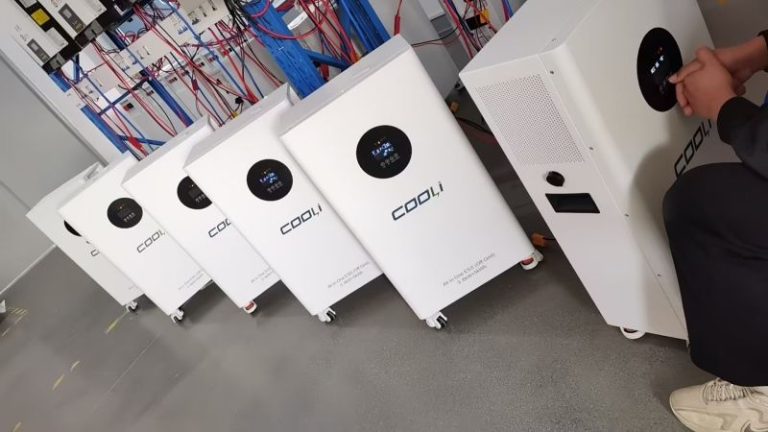
In the Democratic Republic of Congo (DRC), particularly in Kinshasa, power cuts are not an occasional inconvenience—they are a part of daily life. For households and businesses, finding a reliable backup power solution is essential to keep lights on, phones charged, and appliances running. When choosing a battery system to bridge these gaps, the debate often comes down to Lithium vs Gel Battery in Congo.
While traditional lead-acid batteries are being phased out, Gel (gel electrolyte) and Lithium (specifically LiFePO4) batteries are the two main contenders. But which one truly suits the unique demands of frequent, daily blackouts in the Congolese climate?
This article provides a detailed comparison based on performance, lifespan, long-term cost, safety, and maintenance to help you make the best choice for your home.
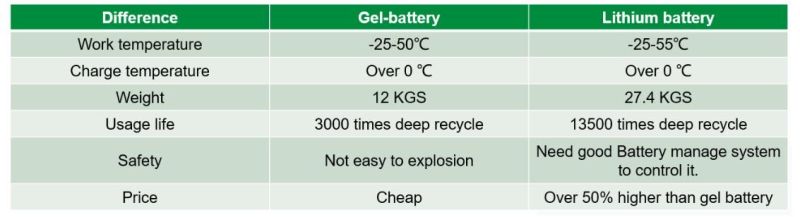
Table of Contents
Performance Comparison
When the grid fails in Congo, your battery needs to deliver power reliably and efficiently. Here is how Lithium and Gel batteries stack up under pressure.
Gel Batteries are a type of lead-acid battery where the electrolyte is suspended in a silica-based gel. They are known for their deep-cycle capabilities, meaning they can be discharged regularly. They typically offer a depth of discharge (DoD) of up to 50-60%. Discharging beyond this recommended limit significantly shortens their lifespan . They are also sensitive to charging voltage; if the voltage is too high, it can damage the gel, a common issue in areas with unstable grid power .
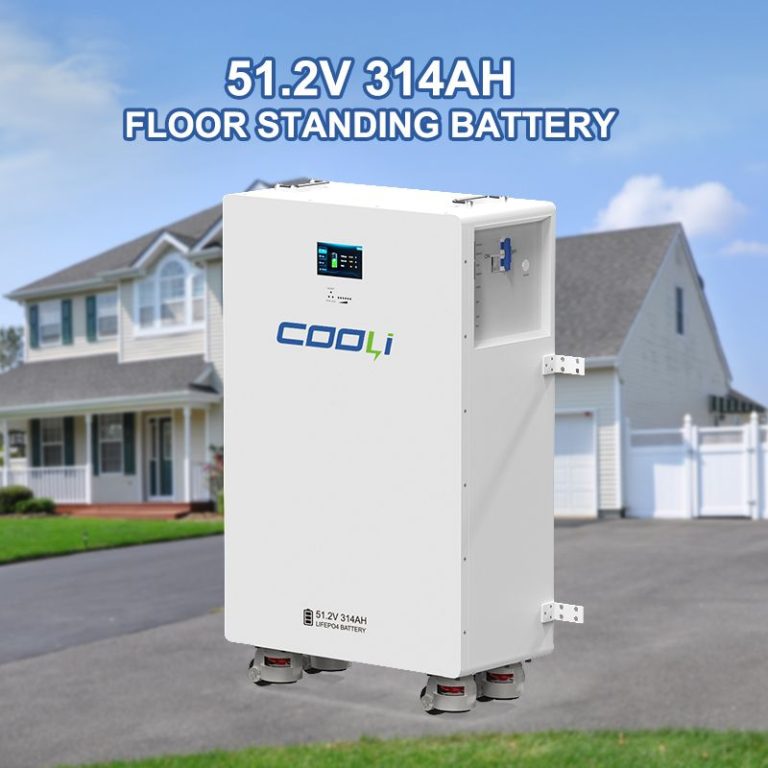
Lithium Batteries, specifically Lithium Iron Phosphate (LiFePO4), are in a different league entirely. They consistently provide 90-95% usable capacity, meaning you get almost double the runtime from a battery of the same physical size . For daily power cuts, this efficiency is a game-changer. A 1kWh lithium battery can run a fan, TV, and lights for hours longer than a 1kWh Gel battery because you can safely use nearly all that stored energy.
Furthermore, lithium batteries handle high discharge rates easily. If you need to run a heavy appliance like a fridge or a powerful inverter, lithium delivers consistent voltage without sweating . In the high temperatures of Kinshasa, lithium also maintains its performance better, whereas excessive heat can degrade Gel batteries faster .
Winner: Lithium – Superior usable capacity and better tolerance to high temperatures make it the performance leader for daily outages.
Lifespan Comparison
A battery”s lifespan is measured in charge cycles. In a place with daily blackouts, your battery will go through a full (or partial) charge and discharge cycle every single day. This is where the difference becomes stark.
Gel Battery Lifespan:
A quality gel battery is rated for cycles, but the rating depends heavily on how deeply you drain it.
- At 50% DoD: A gel battery might last around 1,400 to 1,600 cycles .
- In real-world Congo conditions with daily use, this translates to roughly 3 to 5 years. However, if you accidentally drain it deeper (which is easy to do during long outages), that lifespan can drop to under 2 years .
Lithium Battery Lifespan:
LiFePO4 batteries are renowned for their longevity, even under heavy use.
- At 90% DoD: High-quality lithium batteries can handle 3,000 to over 6,000 cycles .
- In practical terms, with a daily power cut, a lithium battery will last between 8 to 15 years. This means you might replace a Gel battery 2 or 3 times before a lithium battery needs replacing .
Winner: Lithium – With a lifespan 3-5 times longer than Gel, lithium is the clear winner for long-term reliability.
Cost Over 5 Years
This is the most critical factor for Congolese households. While the upfront price tag often scares people away from lithium, a “Cost Over 5 Years” analysis tells a very different story.
The Math:
Let”s say you need a system that provides 1kWh of usable power nightly.
- With Gel, you might need a 2kWh battery bank (to respect the 50% DoD). This costs around $400. When it dies in 2.5 years, you buy another for $400. Over 5 years, you have spent $800 and are left with an old battery about to die again.
- With Lithium, you buy a 1.2kWh LiFePO4 battery for around $600. It lasts 10 years. Over 5 years, you have spent $600 and your battery is still going strong.
Winner: Lithium – Despite the higher upfront cost, lithium is significantly cheaper over a 5-year period in a daily-use scenario .
Safety & Maintenance
Safety is paramount, especially when batteries are kept indoors in homes and apartments.
Gel Battery Safety & Maintenance:
- Pros: They are sealed and spill-proof, so you don’t have to worry about acid leaks like with flooded lead-acid batteries .
- Cons: They still require off-gassing during heavy charging and must be kept in a ventilated area . They are also prone to thermal runaway if overcharged. Maintenance is low but not zero; terminals can corrode and need cleaning .
Lithium Battery Safety & Maintenance:
Modern LiFePO4 batteries are the safest option for home use.
- Built-in BMS: They come with a Battery Management System (BMS) that automatically protects against overcharge, over-discharge, and short circuits .
- Indoor Safe: They produce no gas, no smell, and have no risk of acid leakage, making them safe to install in bedrooms or living rooms .
- Thermal Stability: LiFePO4 chemistry is chemically the most stable, meaning it is very difficult to overheat or catch fire, even in the Congolese heat .
- Maintenance: Literally zero. Install them and forget them.
Winner: Lithium – The built-in electronics and chemical stability make LiFePO4 batteries the undisputed safety champion for indoor use.
Best Choice for Kinshasa Homes
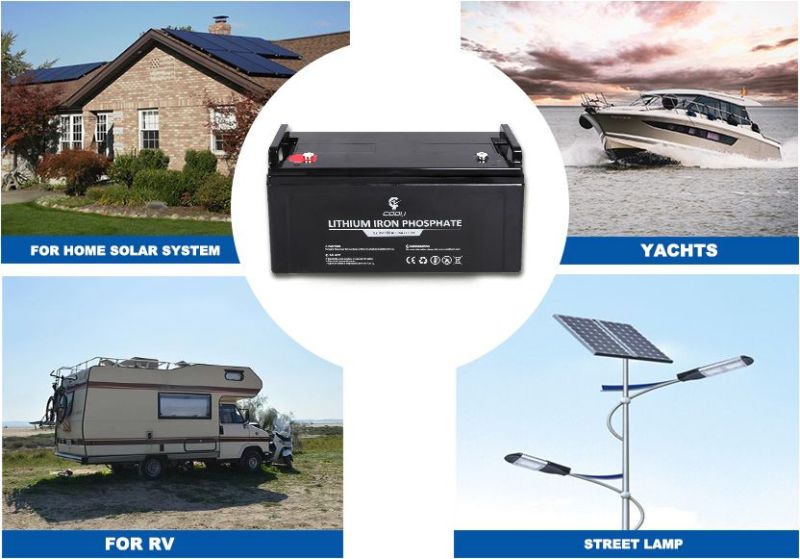
So, Lithium vs Gel Battery in Congo: which one should you buy for your home in Kinshasa?
Choose a Gel Battery IF:
- Your budget is extremely tight and you cannot stretch to the higher upfront cost of lithium.
- You only experience power cuts occasionally (once or twice a week).
- You have a well-ventilated, dedicated battery room or outdoor enclosure.
- You are comfortable monitoring discharge levels closely to avoid going below 50% .
Choose a Lithium Battery (LiFePO4) IF:
- You experience daily power cuts (the reality for most of Kinshasa).
- You live in an apartment or house where the battery must be kept indoors .
- You want a “fit and forget” solution with zero maintenance.
- You want to actually run your appliances (like a fridge or freezer) without worrying about draining the battery instantly.
- You want the lowest total cost over a 5+ year period .
The Verdict
For the vast majority of homes facing daily power cuts in Congo, Lithium is the better investment. While the initial price is higher, the performance, safety, and long-term savings make it the only logical choice for reliable, modern backup power. Look for reputable brands with local support in Kinshasa to ensure you get a genuine product with a proper warranty .